Sunday, March 23, 2014

Starting the Rear Suspension

Will be using the rear springs to keep the rear axle located in the correct  position and using airbags for the weight and spring rates. Reversed the rear springs and sway bar for a better fit.
Chris had to readjust the stock spring locating pins on axle to get the correct pinon angle for the drive shaft. Also where able to get the dive shaft measured and off to the drive-line guy.  
Flipped and remounted the spring brackets.
Here Chris has installed the bar axle brackets, bars, and lower airbag brackets. Everything is tact welded in place till all the adjustments and testing of the travel of the rear suspension are made. 
This is the front view of the suspension setup. The front bracket and the bar frame brackets that secure the suspension  to the frame. The pictures and setup of the rear suspension is the truck at its lowest point. The ride height will be between 4-6" from this point. The design and engineering of the suspension was done by One Up Offroad. 
This will be welded to the frame and the airbags will rest between the lower brackets that are connected to the bars and this bracket.
Here are some different views of the setup. 


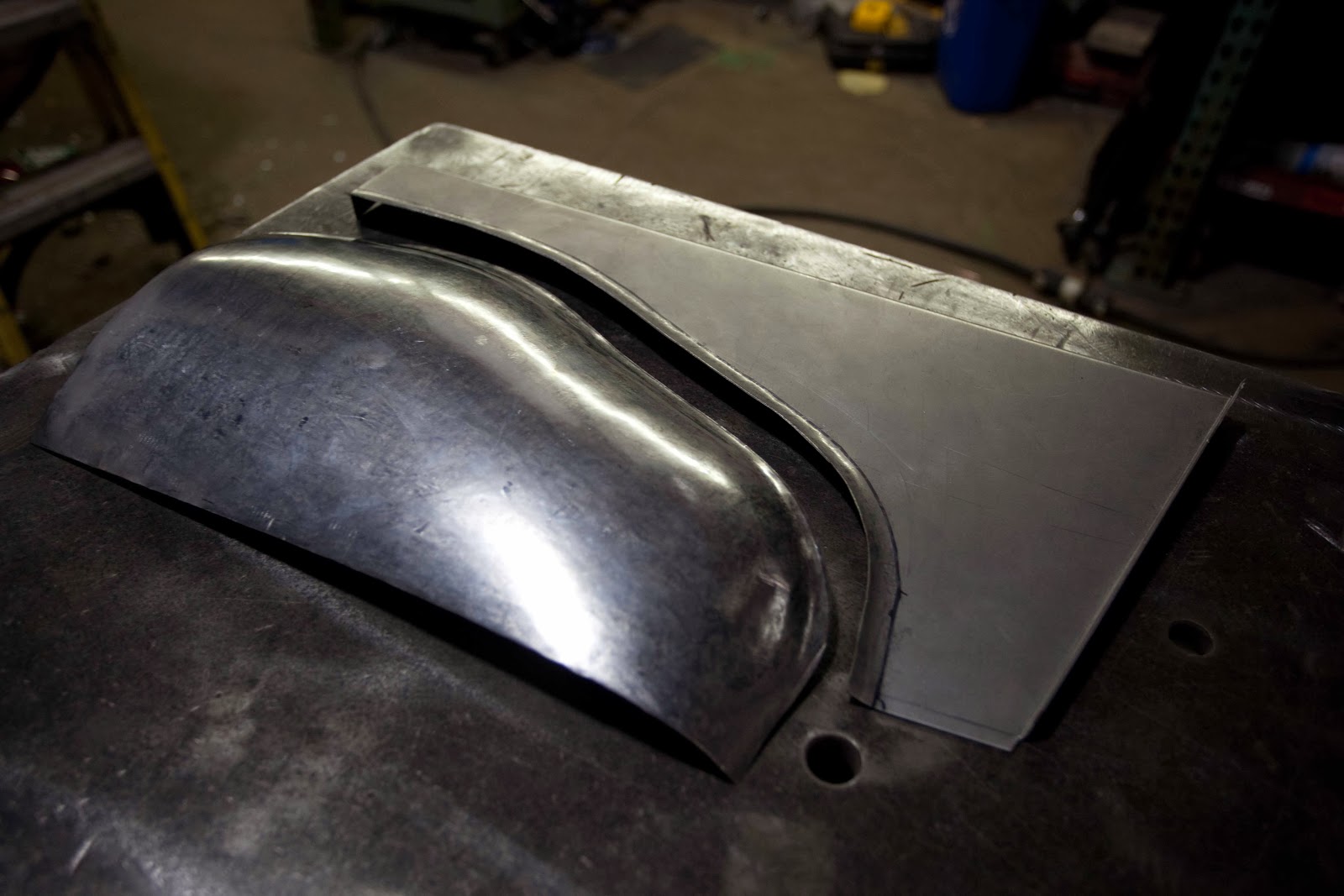
Not rear suspension but Chris has been also working on the new center trim piece.

Sunday, February 23, 2014

Center Console

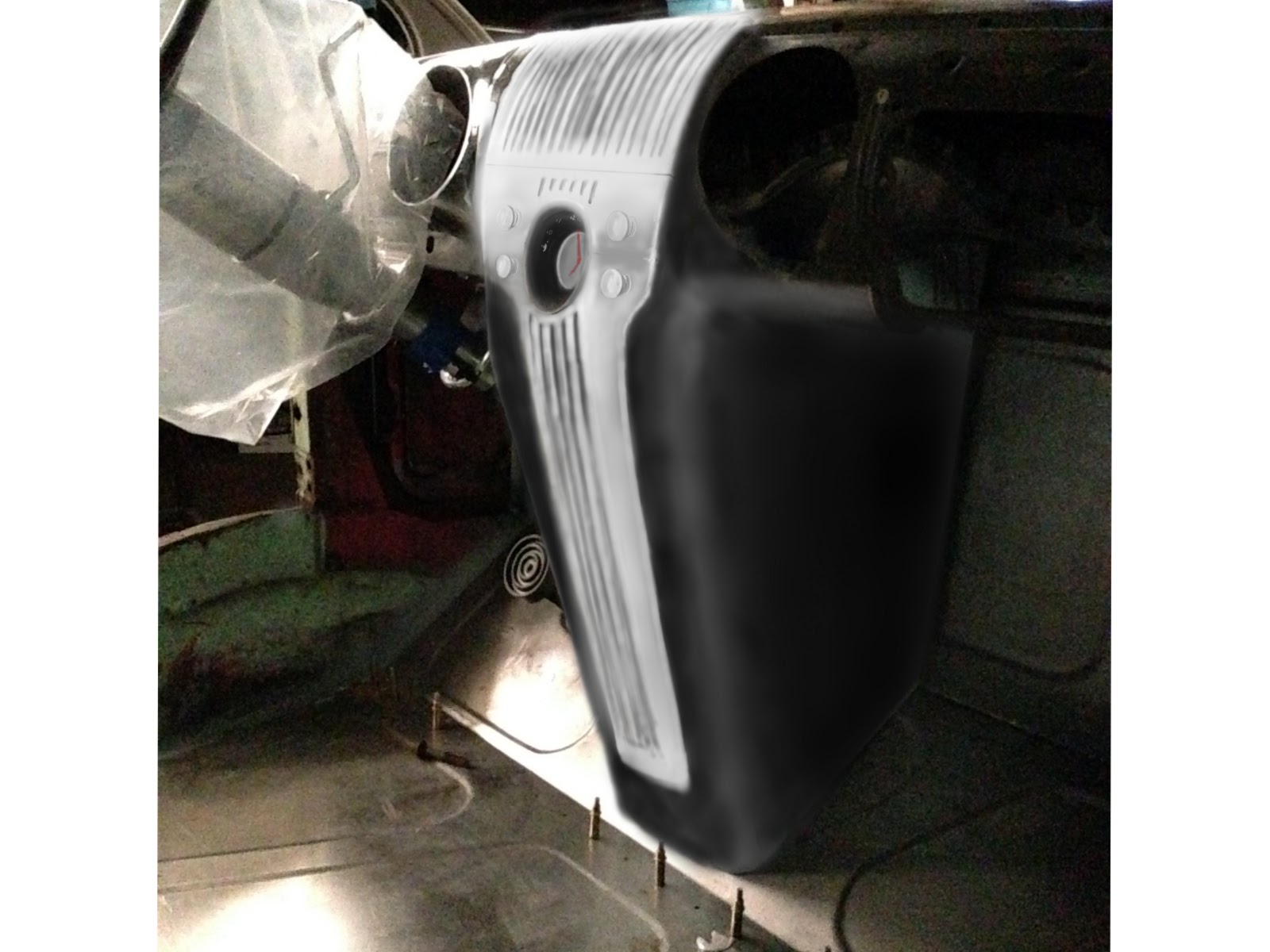
This is a photoshop drawing I made for Chris to give him a idea what I was looking for.

Got this inspiration from a early Lincoln. The center console will house the a/c vents, clock and controls for the vintage air. It will also hide the shifter cable and wiring.
Chris fitted and welded in the new metal   
The bottom piece will be butt jointed to the dash.

The lower half of the console

Some work to get the radius in the part.
Tack up and getting a test fit before the final welding.


Cleaned up and ready to cut in the spot for the clock.
Chris made a jig to hold the dash to make it easier to work on. The new home for the clock is in. Will be making a custom chrome piece to fill in the center of the dash and the console. The plan is to have it waterfall down and replicate the look of the front grill of the truck.

Didn't like how you could see the a/c unit and the steering column so Chris is making some part to close everything in. 

We will also have removable side panel to access the center console. 
The column cover to hide the shifter cable and steering shaft.


Both sides are done and ready for the removable side panels. The recessed part of the panel under the dash will be used for my rocker switches.
Side panels installed. We left about two inches of space from the dash panel to the firewall so that the a/c unit could pull air from the cab on both sides.

This will be the part that will be chromed and fitted for the center console. Chris and I design it and had it CNC out of 1/4" material. Chris will use a mechanical brake to form it to the shape that we need and do some fine tuning to make it fit.

Sunday, January 12, 2014

Exhaust

Went with 3" stainless exhaust and a set of  MBRP mufflers. I heard them on a friends truck and like the nice deep throaty sound they have and they look real nice too.  

Installed a h pipe for some balance in the system.
The system is a little on the short side because of the rear suspension set up. Plan on exiting the exhaust out the side before the back wheels. Will wait till we have the rear suspension installed to finish up the exhaust. 

Hood Hinges


We used 1935-36 Ford trunk hinges for the smallest hood ever made for a COE. Located the new hinges where the stock tabs were and tucked them up in the firewall.

Chris fabricated the new inner hood structure to match up with the new hinges.  
A very nice fit after a little tweaking and some adjustments. 

Sunday, December 22, 2013

Gauages

Okay this part might seam a little crazy to some of you, but here we go. I wanted to keep the original cluster of gauges that came with the 1946-48 Ford dash, but with update gauges. I made a inquiry into having them done professionally, put it was more then I wanted to spend. We decided to tackle it our self and see what we could come up with. I had a old gauge that we dismantled to see what we could do with it and had test fitted it into the stock cluster. I wanted to do this before tearing into a new set of gauges. After playing around with the old gauge I was feeling pretty confident that we could make this work.

This is the stock cluster after taking the old gauges out and now have started to rebuild with the new gauges. Had to do some machine work to make the circle opening a little larger to accommodate the new gauges and made some bracket to hold them in place. We took the trim ring and glass off the new gauges and discarded them. There goes my warranty.  

Did some filing on the sides of the gauges to make a proper fit. 


The black rings had to be epoxy in place to hold the faces in. The original stainless ring and glass held the gauges together. Not picture is the stock glass and frame that protects and holds every thing together. 

The glass, frame, and trim piece all put together. 

Not the best picture, but this is the cluster installed into the dash. Looks pretty close to the stock gauges except you can see a little of the radius at the top. I'm very pleased on how it turned out and that we saved about two thousand dollars. Next we will fit the speedometer, tach, and clock. 


Small Stuff But Important


Working on some of the small stuff that needed to be worked out and finish up.


We will be using stainless tubing to run the coolant from the radiator to the motor that is located behind the cab. These are some of  the brackets that will hold the hard lines off the frame.  


Used 1-3/4 for the bottom outlet and 1-1/2 for the top inlet. Also have two bleeders at the two highest points to release air out of the lines.
We have flex hoses between the motor and the hard mounted tubing ,also at the radiator. This is where we will have one of the bleeders for any air trap in the lines. Still have a little more work to finish up but getting close.


Installed the emergency brake and ran the cable to the drive line brake drum. Also installed and mounted the electric kick down for the transmission. Have the cable for the shifter installed on the transmission side, but need to connect to the steering column to finish it up. 
Everything is a little more difficult when the motor is behind you. This is the bracket that Chris fabricated up for the accelerator cable to work properly.  
Here is the complete setup for the new accelerator linkage. Instead of pull it is now push and pull. More small stuff coming soon.